Egg Pasta Dough
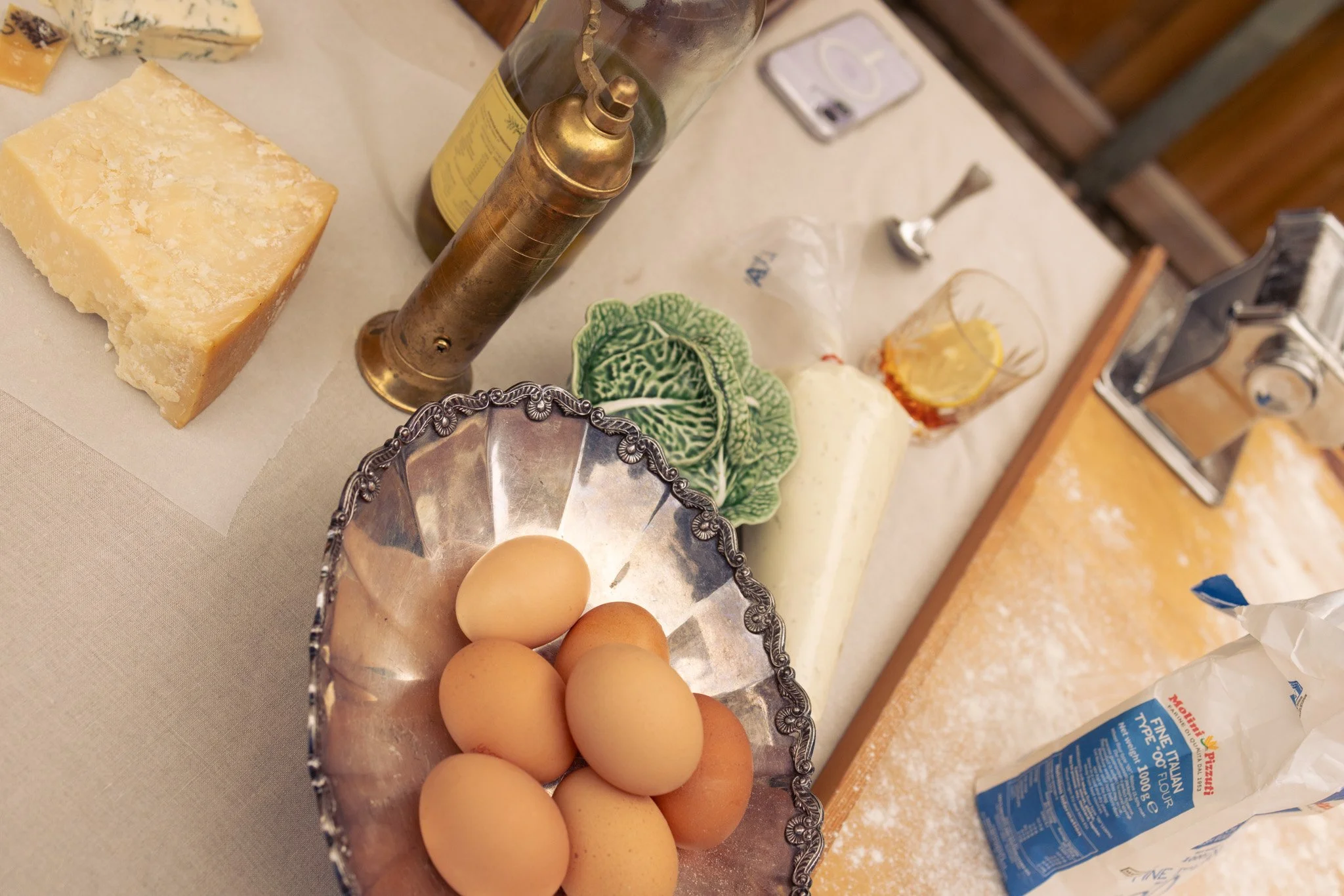
After years of practice, making fresh pasta has become second nature to me, and it wasn't until I sat down to write this recipe that I was reminded of just how much detail and craft is quietly hidden in the process.
Pasta is a really nostalgic experience for me, I'm sure it's the same for many of you with Italian heritage. Just like Massimo Bottura describes in Chef's Table, it was a novelty to sit around the table watching my Nonna make her pasta on the dining table, picking at anything I could get my hands on.
Learning how my Nonna makes her pasta is a true representation of the "Nonna maximising" trend, using only her hands to measure quantities. One egg and one cup of flour makes enough for one person, and just like that she will make the perfect pasta without any scales or measuring ups.
Now, as an adult, making fresh pasta is a simple, rewarding process that comes naturally to me, where I have worked out my own ratio but using a scales (sorry Nonna).
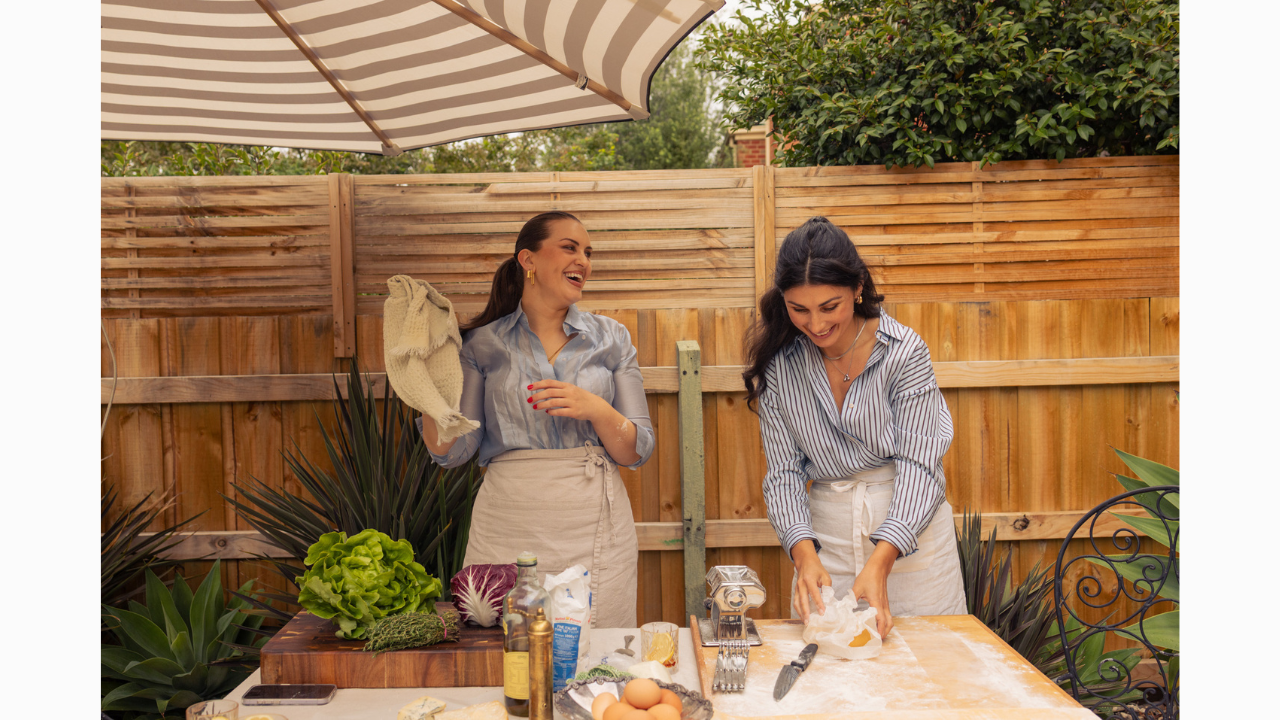
Based on this very experience, I have come together with a new friend, Amielia, who is equally as excited about making pasta, to bring you “Very Good Pasta”, a series of different traditional pasta.
Egg pasta dough
There is something deeply satisfying about making your own pasta. It is one of those things that feels like a big project the first time, and then becomes second nature. Flour, eggs, your hands, a little patience. That is all you need.
This recipe is designed to be used to make any pasta shape or sheet. Think of it as your go to for pasta making.
Ingredients
250 grams whole eggs
450 grams 00 flour
1 pinch of salt
Combine eggs and flour
Get your eggs ready by cracking them into a bowl. Sieve flour onto a wooden bench to make a mini mountain, then use the bottom of a bowl to create a well in the centre, deep and wide enough to hold all your eggs.
Add the eggs and 1 pinch of salt into the well. Whisk the eggs, gradually drawing in the flour from the inner walls of the well until you have a wet, shaggy dough. Use a bench scraper to clean up any hard flour bits from the surface.
Knead the dough
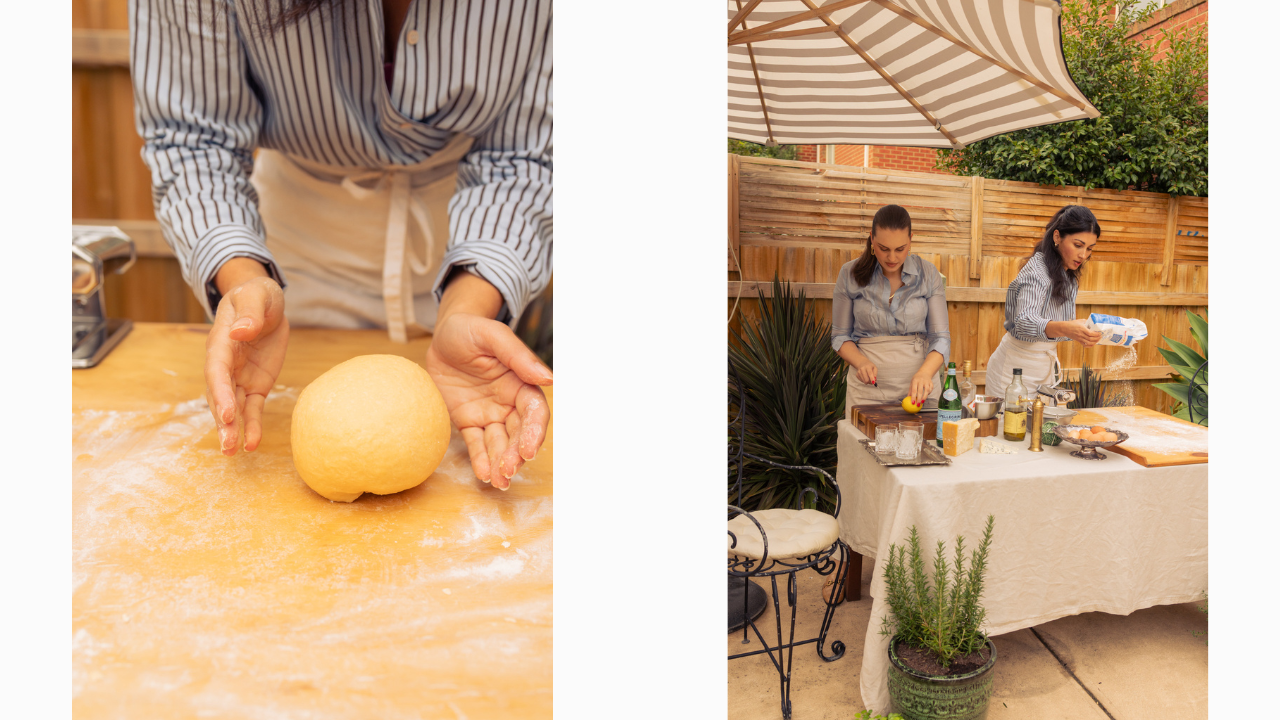
Knead the dough by working in a clockwise motion, pulling and stretching with the heel of your hands. Keep going for 5 to 8 minutes until the dough is smooth, soft, and elastic. This step is really important. It builds the gluten strength you need to roll the dough thin without it tearing. Do not rush it. You can check to see if your dough is ready by poking a finger at the top of the ball gently. If it bounces back, it's ready.
Rest the dough by wrapping it loosely and set aside to rest for 30 minutes. This relaxes the gluten, making it much easier to roll a thin pasta sheet.
Make your pasta sheets
Once rested, divide the dough into quarters. Keep the pieces you are not using covered so they do not dry out. Take one quarter and flatten it with a rolling pin until it is roughly the width of your pasta roller on your pasta machine and thin enough to feed through.
Start on the widest setting, number one, and feed the dough through. You will get a rough rectangle. Take both ends and fold them into the middle like a letter, flatten it down, and feed it back through on the same setting with the open end going in first. Repeat this 3 to 4 times. This process gives you a smooth, even sheet to work with.
Move to setting two and feed the sheet through, then keep stepping up through the different settings until you reach the thickness you need (no skipping!). From here, the sheet is ready to cut, fill, or shape into whatever pasta you have in mind.
Notes
Fresh eggs make a real difference here. The yolks give the dough its colour and richness, so use the best quality eggs you can find.
00 Flour is worth sourcing as it has a high protein content helping hold structure in your pasta.
On thickness, every pasta machine is a little different, so always good to double check your settings. A nice rule of thumb is to hold the sheet up to the light. If you can see your hand shadow through it, you are there.
Pasta thickness guide: Ravioli and filled pasta: 0.5 to 1.0 mm, Angel hair and capellini: 0.75 to 1.0 mm, Tagliatelle and fettuccine: 1.0 to 1.5 mm, Lasagna sheets: 1.2 to 1.5 mm, and Pappardelle: 1.5 to 2.0 mm
Images & videos: Pardu by Nic Williams
